Marie Skłodowska-Curie Actions Postdoctoral Fellowships (MSCA PF)
Bring your postdoctoral project to a European health and sport technology ecosystem.
Built around AI, biomechanics, sports rehabilitation and real-world movement health.
Our interdisciplinary consortium helps outstanding researchers design competitive MSCA Postdoctoral Fellowship proposals with expert supervision, advanced laboratories, proposal-writing support and access to sport, clinical, industry and policy environments.

Why this consortium
MSCA Alumni
First-hand fellowship experience in the consortium
Expert Review
CrowdHelix proposal review & editing support
Luxembourg Ecosystem
LuxInnovation, uni.lu, LIST, LNDS connections
International & Multidisciplinary
Luxembourg, UK & Italy across 4 disciplines
Career Acceleration
ERC, Horizon Europe, industry & beyond
MSCA Alumni
First-hand fellowship experience in the consortium
Expert Review
CrowdHelix proposal review & editing support
Luxembourg Ecosystem
LuxInnovation, uni.lu, LIST, LNDS connections
International & Multidisciplinary
Luxembourg, UK & Italy across 4 disciplines
Career Acceleration
ERC, Horizon Europe, industry & beyond
Open topics
Research Areas
Each area is designed around a compelling scientific challenge that fits the MSCA Postdoctoral Fellowship evaluation criteria. Select a topic to read the full description and express your interest.
Who you will work with
Meet the Supervisors
Each fellow works with a primary supervisor and benefits from cross-institutional mentoring across the interdisciplinary consortium.
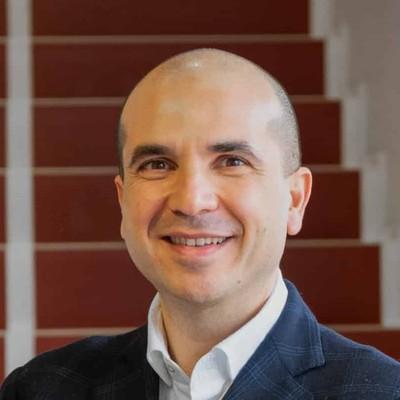
Prof. Alessandro De Nunzio
LUNEX
Luxembourg
Human motion analysis, sensory-motor integration, and innovation in rehabilitation technologies for sport and neurological recovery

Prof. Daniele Cafolla
Swansea University
United Kingdom
Robotics, mechatronics, and AI for assistive devices, wearable rehabilitation systems, and human motion analysis
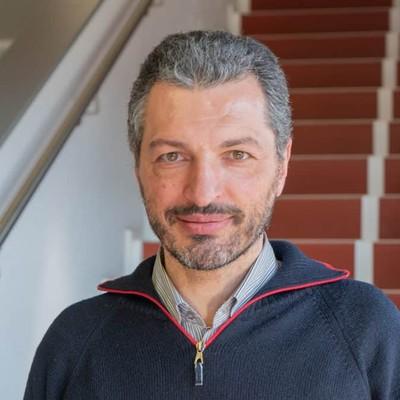
Prof. Mario Molinara
University of Cassino and Southern Lazio
Italy
Computer science and pattern recognition applied to biomedicine, including computer-aided diagnosis systems and movement-based early detection of neurodegenerative disease
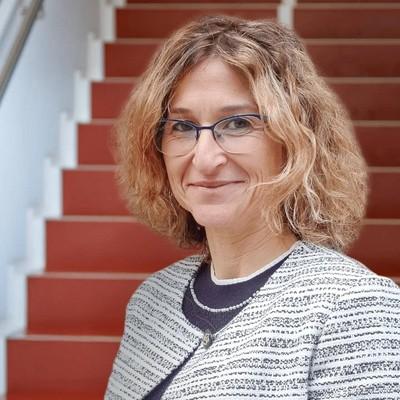
Prof. Olga Barrera
LHSSRI ASBL
Luxembourg
Biomechanics, biomaterials, and translational health and sport sciences, combining experimental and computational approaches

Who can apply
Eligibility
Holds a PhD or will obtain it by 9 September 2026.
Maximum 8 years of research experience from PhD award date.
Complies with the MSCA mobility rule: must not have resided or carried out their main activity in the host country of their chosen research area for more than 12 months in the 3 years immediately before the call deadline.
Full official criteria: MSCA Postdoctoral Fellowships — European Commission
Deadline — expression of interest to the consortium by 31 July 2026.
Common questions